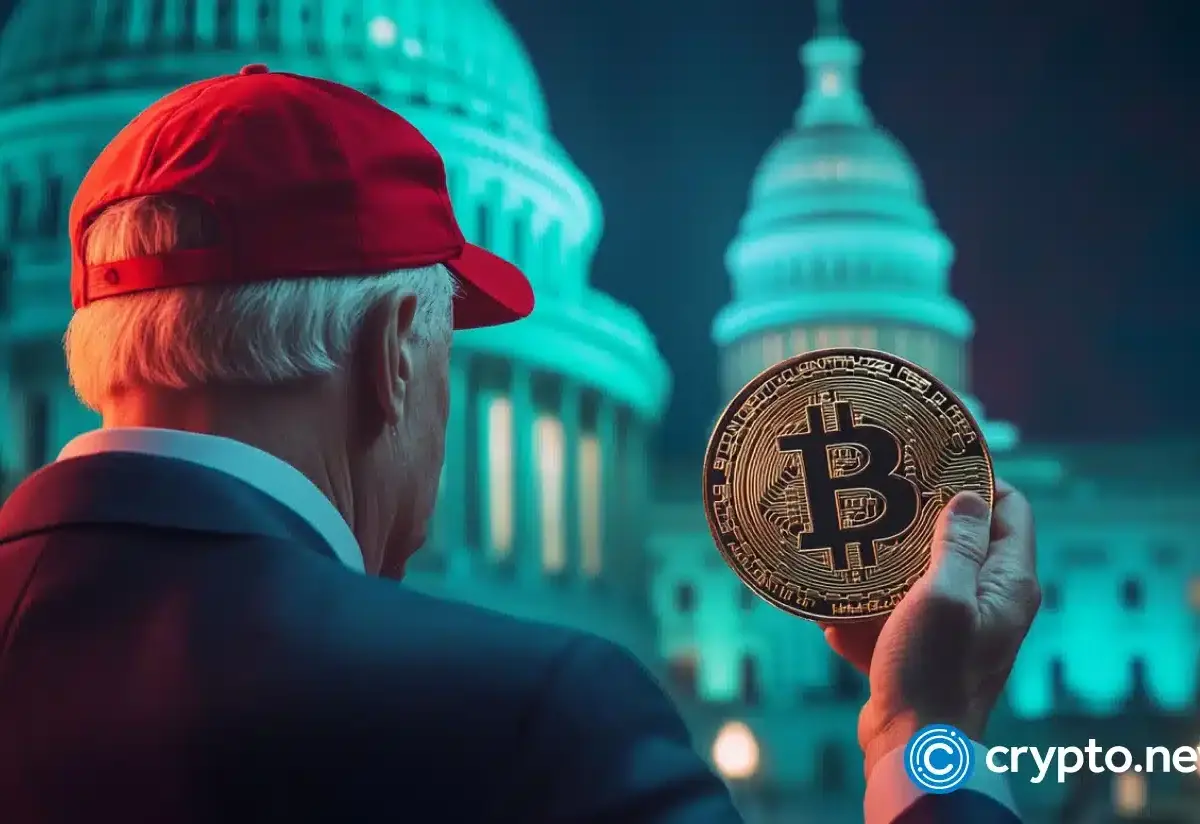
Market commentator Jim Cramer claimed on CNBC that the Trump administration plans to purchase Bitcoin for a proposed U.S. Strategic Reserve amid ongoing market volatility.
Summary
- Cramer claimed the Trump administration may buy Bitcoin for a proposed U.S. Strategic Reserve, reportedly targeting a $60,000 entry price amid recent market volatility.
- The U.S. government currently holds 328,372 BTC (over $23 billion), with executive orders specifying that reserves come from asset forfeitures and cannot be sold; Treasury officials say public funds cannot be used to buy crypto.
- Interest in a Strategic Bitcoin Reserve is rising, with Polymarket placing the probability of establishment before 2027 at 31%, while BTC trades around $71,133, up 3% over the past 24 hours.
“I heard at $60,000 the President is gonna fill the Bitcoin Reserve,” Cramer said on Friday’s Squawk on the Street segment.
The remark coincided with a sharp Bitcoin sell-off earlier in the week, which saw BTC briefly approach $60,000 before rebounding above $70,000. If the purchase occurs at the cited price, Bitcoin would need to decline more than 15% for the administration to execute it.
What the data shows
According to Arkham data, the U.S. government currently holds 328,372 BTC, valued at over $23 billion, with no recent changes in holdings. An executive order from March 2025 specifies that BTC for the reserve would come from criminal and civil asset forfeitures, and deposits cannot be sold.
Treasury Secretary Scott Bessent has stressed that the federal government has no legal authority to bail out Bitcoin or compel banks to purchase it, reinforcing that public funds cannot be used to acquire cryptocurrency assets.
Despite these legal constraints, interest in a Strategic Bitcoin Reserve appears to be growing. Polymarket data shows the probability of such a reserve being officially established before 2027 has risen to 31%, up from 23% in early January.
At the time of reporting, Bitcoin was trading at $71,133.74, up roughly 3% over 24 hours, reflecting ongoing market volatility and investor attention on potential government involvement.