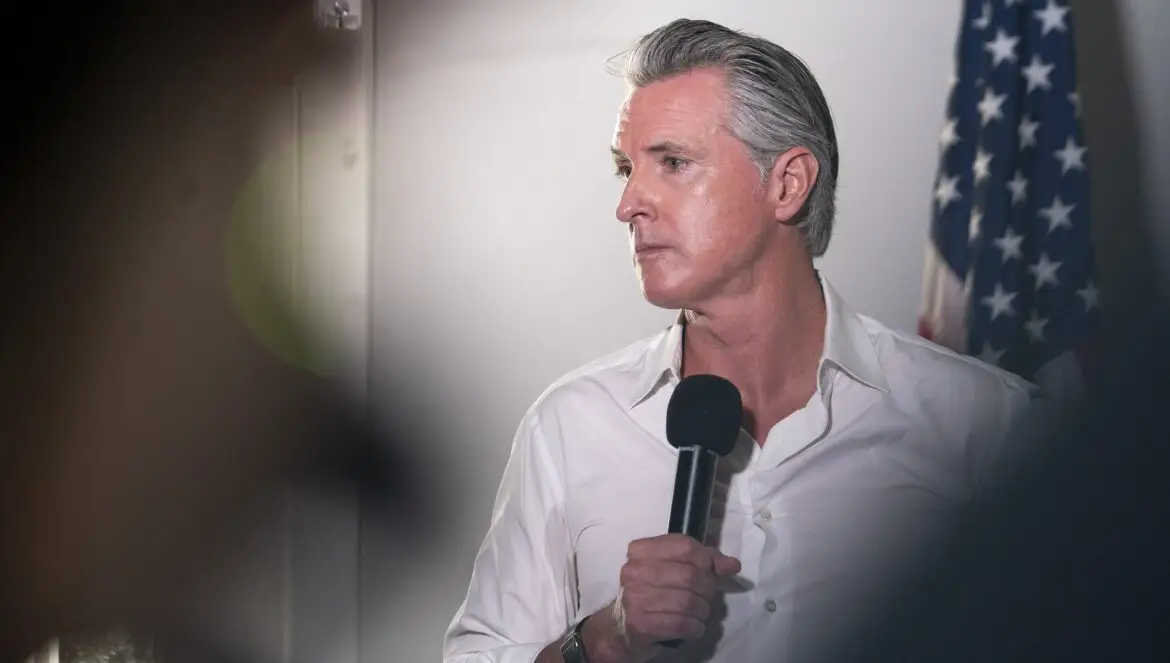


California governor Gavin Newsom’s signature is now on a slew of new tech laws, including a dozen new state bills that target social media and AI giants.
In addition to strengthening existing child safety laws, the state’s latest efforts to regulate products from players like Meta and OpenAI include provisions that could effectively ban social media for children under 16.
The policy move would place California on par with national governments like Australia, which was the first to bar young users from accessing social media. In practice, the law has proven to be difficult to enforce.
The highly anticipated child online safety legislation comes as the industry faces mounting pressure to curb Big Tech’s influence on young minds, including social media algorithms, AI chatbots, and educational technologies found in the classrooms.
“Our children’s safety deserves to be at the center of every conversation about technology. As innovation moves faster our protections must keep pace,” Newsom said in a press release.
California cracks down on “addictive” social media
The headlining bills, AB 1709 and AB 2, place stronger restrictions on the ways teens can interact with social media. Under AB 1709, social media platforms cannot permit children under the age of 16 from accessing social media with harmful features. The bill specifically singles out “addictive” elements like personalized feeds and video autoplay.
Platforms must confirm users’ ages before offering such features, a move that could galvanize calls for stronger age-assurance tools.
With AB 2 on the books, platforms can also be held financially liable for child harm, ranging from $5,000 to $1 million per child.
Child safety nonprofit and bill sponsors Common Sense Media applauded Newsom’s decision in a statement to the press. “Today is a huge victory for kids and parents across California,” the organization wrote. “The momentum in this fight has shifted, and it shifted here, in the tech companies’ home state.”
Parents of children who died by suicide following extensive social media and chatbot use have rallied behind the legislation, including Julianna Arnold, executive director of Parents RISE. “We are grateful to Assemblymember Lowenthal not only for listening, but for taking our lived experience seriously and letting it shape the legislation,” said Arnold in a statement to the press.
Platforms may lean more heavily on age-gated teen accounts in light of the new regulation. Studies have shown, however, that teens often find ways to defy age restrictions.
“For years, the tech industry has told parents that the answer is to monitor more closely, set more parental controls, and somehow keep up with products that are constantly changing,” said Shelby Knox, Director of Online Safety Campaigns at ParentsTogether Action. “But parents cannot parental-control their way out of platform designs engineered to keep kids engaged.”
Newsom takes aim at AI companies, backed by AI companies?
AI developers have lobbied California leadership over the last several years in an effort to tamp down its proposed regulation efforts. They have had some success, including Newsom’s veto of a similar child online safety bill last year.
OpenAI CEO Sam Altman appealed directly to Newsom about the new legislation package last week, according to insiders, after industry leaders pushed for an increasingly narrower scope.
But in recent months, more companies have signaled they’re less adamantly opposed to child safety laws than they once were, especially as most now face increasingly arduous court battles and steep financial penalties. A Meta official recently alluded to passing the Kids Online Safety Act to avert ongoing litigation. And OpenAI later came out in favor of California’s proposed AI legislation.
Amid this debate, Newsom signed into law SB 1179, also known as Adam’s Law, which attempts to enforce stronger safety requirements for AI companies. The legislation was named for Adam Raine, a young teen who died by suicide after consulting with ChatGPT. Raine’s parents filed the first wrongful death lawsuit against an AI company for alleged harmful chatbot behavior.
Adam’s Law requires developers of companion chatbots to conduct and publish annual child safety risk assessments and to submit their products to independent audits. Developers must create crisis response processes for chatbots, as well. Many companies already have safety measures in place, but guardrails have consistently failed to fully prevent chatbot behavior harmful to teens.
“We still have not adjusted to life without Adam, but we are pleased that an element of his legacy is to help make AI chatbots safer for minors,” said Raine’s parents, Matt and Maria Raine, in a press statement. “We believe the risks of unregulated AI companionship rank right up there with other more discussed AI risks, and we are confident Adam’s Law will save lives and prevent other harms.”
Another bill expands the state’s definition of “child sexual exploitation” to include “any digitally altered or AI-generated matter that depicts a person under 18 engaged in an act of sexual conduct.”
Children’s toys with built-in companion chatbots, which have prompted concern from safety advocates, are now prohibited in California under SB 867.
New privacy regulations will add greater restrictions on the use of student data in AI systems deployed in K-12 schools. Some cities are moving to ban AI in K-12 classrooms outright.
Privacy groups are still concerned about downstream effects
While child safety organizations celebrate a victory in a years-long effort to enact bills like AB 1709, civil society groups remain concerned about their implication on free speech.
The Electronic Frontier Foundation called AB 1709 a “well-intentioned, but deeply flawed piece of legislation,” and a “massive privacy and free speech nightmare.” Last month, the organization urged Newsom to veto the measure until concerns about censorship were properly addressed.
Instead of focusing on bans, the organization wrote in a Sept. 10 press release, “we should redouble our efforts to get technology laws right — and support the passage of new robust privacy laws that target surveillance business models. That’s how we protect everyone in the AI age.”
California’s new laws are set to go into effect next year.
Source: https://mashable.com/tech/california-passes-child-safety-laws-for-social-media-ai