
Key Takeaways:
- Shakepay launched bitcoin-backed loans on April 21, 2026, becoming the first crypto platform in Canada to offer the product.
- Loans carry a 9.5% APR, cap at $50,000 CAD, and are backed by a 3-year exemptive relief decision from Quebec’s AMF.
- CEO Jean Amiouny says the feature is rolling out gradually, with higher loan limits expected over time.
Canada’s Shakepay Offers Bitcoin-Collateralized Loans Following AMF Exemptive Relief
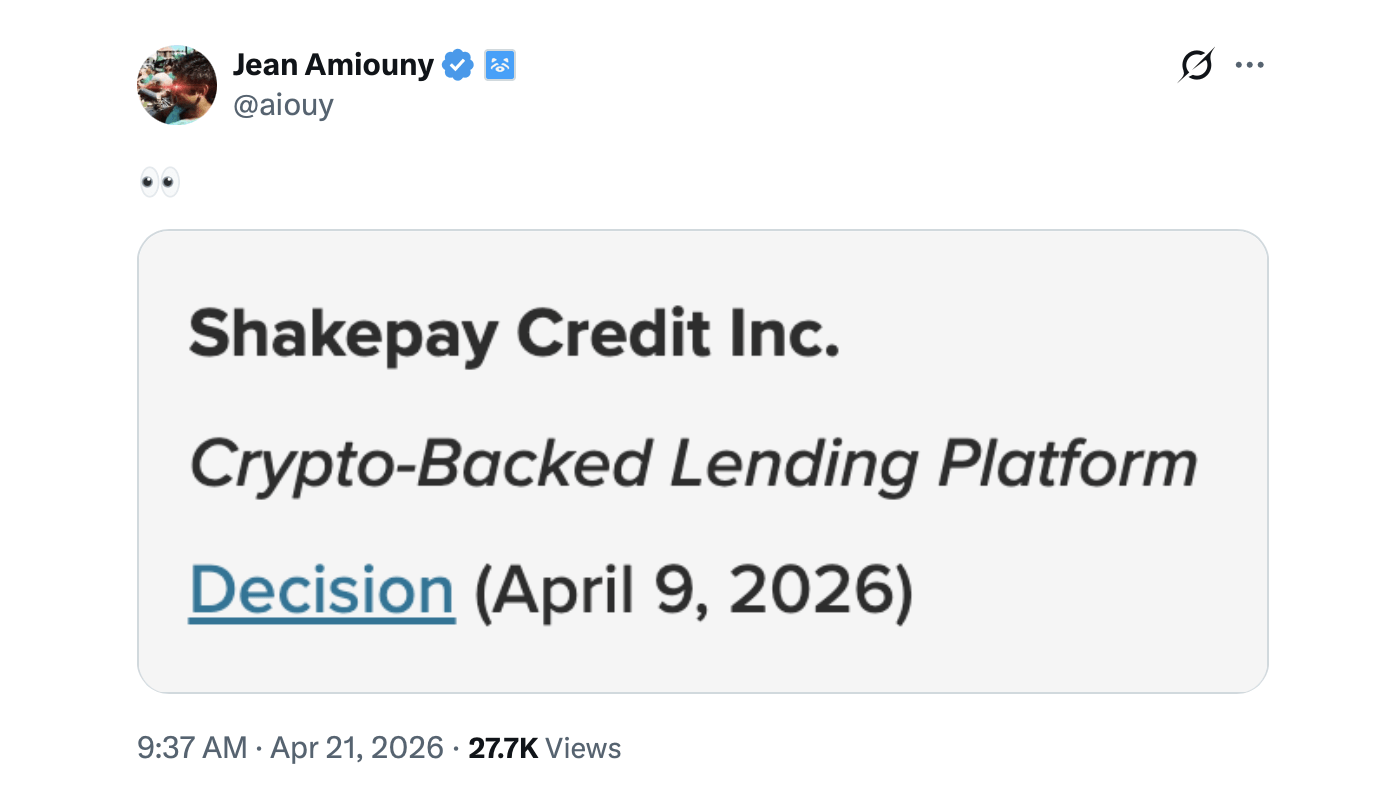
CEO Jean Amiouny announced the launch on X, calling bitcoin-backed loans one of the most requested features since the company was founded. “For those who never want to sell and live on a bitcoin standard, borrowing against your bitcoin is one of the most powerful financial products available,” Amiouny wrote.
The product allows Canadian residents to borrow fiat currency against their bitcoin holdings without selling. Borrowers avoid triggering taxable events that a sale would typically produce under Canadian tax rules.
Loans carry a 9.5% APR with a minimum of $100 CAD and a current maximum of $50,000 CAD, with limits expected to increase over time. There are no origination fees and no early repayment penalties. Funds are available within minutes of approval, deposited directly into a user’s Shakepay account or linked bank.
Collateral is held in segregated cold and hot wallets by approved third-party custodians, including Coinbase Custody. At least 95% of collateral must sit with a third-party custodian when the loan-to-value ratio falls below the margin threshold. Shakepay has confirmed there is no rehypothecation of client collateral, except in liquidation scenarios.
The platform monitors LTV in real time. Margin call notices go out at 80% LTV, and automatic liquidation can be triggered at 90% LTV to cover outstanding balances. A 3% liquidation processing fee applies in those cases.
The launch follows an exemptive relief decision issued April 9, 2026, by the Autorité des marches financiers, Quebec’s securities regulator, with passport coverage to other Canadian provinces and territories. The decision applies to Shakepay Credit Inc., a wholly owned subsidiary, and grants a three-year exemption from dealer registration and prospectus requirements for crypto-backed lending arrangements.
Under the terms of that relief, loans are denominated in CAD or USD and structured as term loans or revolving lines of credit ranging from three months to three years. Collateral is currently limited to bitcoin and ether unless regulators approve additional assets.
Borrowers must be Canadian residents who have completed KYC through Shakepay Inc. Clients must also acknowledge a mandatory Loan Risk Statement covering volatility, custody risks, and the absence of CIPF coverage. Regulatory filings also prohibit borrowers from using loan proceeds to purchase additional cryptocurrency.
Shakepay reached several regulatory milestones before this launch. The company registered with CIRO as an investment dealer in January 2025, becoming the first Quebec-based crypto platform to do so. In May 2025, it became the first crypto-native company admitted to Payments Canada.
The feature is being enabled gradually. Not all users will see it on the app’s home screen immediately. Eligible customers can access the product directly through the Shakepay app once it appears in their account.
Bitcoin-backed loans have been available through platforms such as Ledn and various decentralized protocols, but Shakepay’s entry brings a regulated, domestic option to Canadian borrowers operating under provincial securities oversight.
Shakepay has confirmed that no client deposits are used to fund loans and that the company files audited financials with regulators as required under the AMF decision.
Canadian customers who hold bitcoin and want access to liquidity now have a regulated path to borrow against those holdings without exiting their position. Shakepay says the current rollout is gradual, and users can check the app home screen to see if the feature has been enabled for their account.