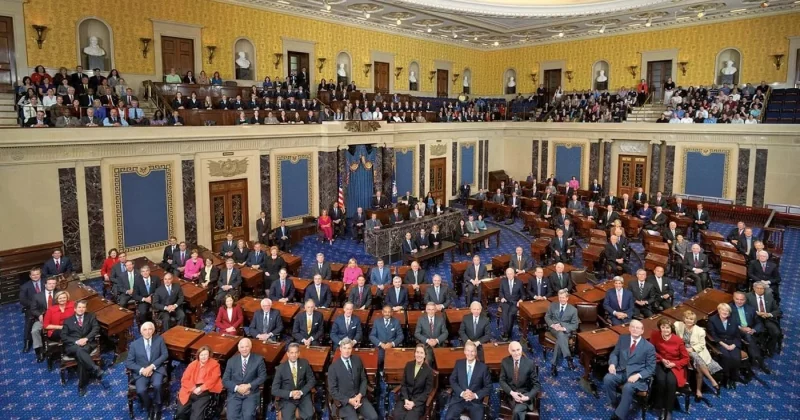
Five of the largest labor unions in the US, including the AFL-CIO and SEIU, have sent a joint letter to senators urging them to vote against the Clarity Act. The letter, dated between May 10 and 12, 2026, lands just days before the Senate Banking Committee is scheduled to review the bill on May 14.
The unions’ core argument: the legislation could jeopardize workers’ retirement savings by opening the door for digital assets to seep into public pensions and 401(k) plans. Those accounts collectively hold an estimated $39 trillion.
What the Clarity Act actually does
The Clarity Act is designed to establish a regulatory framework for crypto markets, governing how digital assets are classified, traded, and supervised at the federal level.
Proponents, including Coinbase and other major crypto industry players, argue the bill would support institutional adoption and foster innovation.
Michael Saylor, the Bitcoin evangelist who turned MicroStrategy into what is essentially a leveraged Bitcoin fund, has been vocal in his support. He views the Clarity Act as “institutional validation for BTC” and believes it could enable entirely new yield markets built around digital assets.
Why unions are pushing back
The letter to senators argues that the Clarity Act permits “outsized risks” in digital assets, risks that could ultimately destabilize the broader economy for working Americans.
The American Bankers Association has also expressed concern that the Clarity Act could undermine existing financial protections. When labor unions and banks agree on something, it’s worth paying attention. Those two groups occupy opposite corners of most policy fights.
The broader regulatory tug-of-war
Critics maintain that the bill swings too far in the other direction. Rather than protecting consumers, they argue it essentially gives crypto firms a lighter regulatory touch than traditional financial institutions enjoy. That asymmetry, the unions warn, could create systemic risks if retirement fund managers start allocating to digital assets under the new framework.
The timing of the union letter is deliberate. With the committee vote scheduled for May 14, the window for influencing senators is narrow.
What this means for investors
If the Clarity Act stalls in committee or gets significantly amended, expect a period of prolonged regulatory uncertainty. That tends to weigh on both token valuations and institutional appetite for the space.
The deeper risk is subtler. If the union-backed opposition successfully frames crypto regulation as a threat to retirement security, it poisons the well for future legislation too.
What to watch: the May 14 committee vote is the immediate catalyst. But the real tell will be whether any senators who previously supported the Clarity Act start hedging their positions in response to the union pressure.