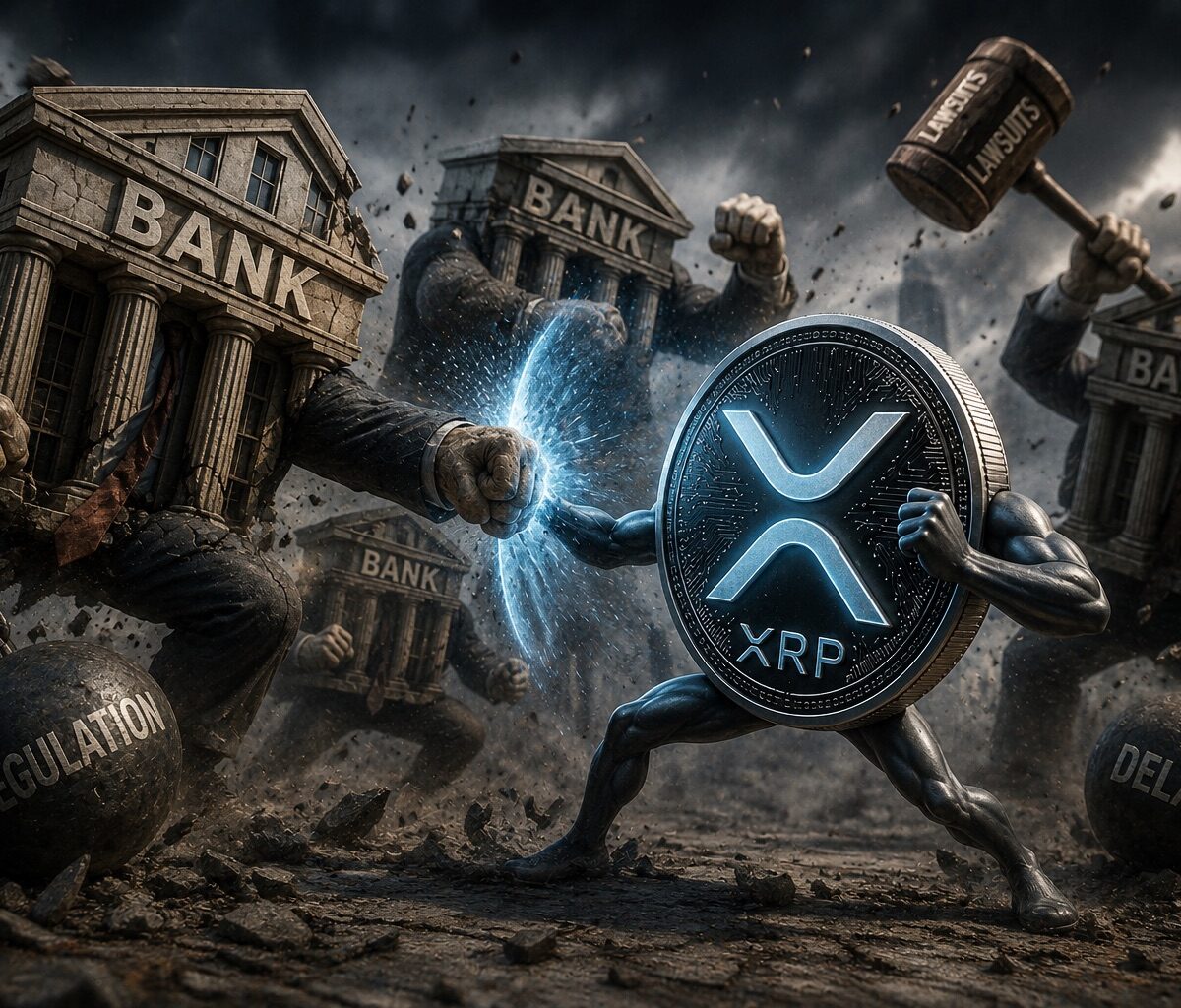

Ripple, XRP, and RLUSD have become the focus of a new controversy after crypto commentator Pumpius claimed major banking groups are lobbying against legislation that could strengthen Ripple’s stablecoin ecosystem. The claim gained traction after internal messages linked to the American Bankers Association revealed concerns about stablecoin regulations and their potential impact on traditional bank deposits.
Ripple, XRP And RLUSD Enter The Banking Debate
The claims that banks are trying to stop XRP and RLUSD gained attention after crypto commentator Pumpius shared materials allegedly linked to the American Bankers Association ahead of a Senate Banking Committee discussion on digital asset regulation. The reported message warned that parts of the proposed legislation could allow stablecoin issuers to compete more aggressively with traditional banks for customer funds.
That concern largely centers on the growing influence of regulated stablecoins like Ripple’s RLUSD. Unlike volatile cryptocurrencies, stablecoins are designed to maintain a fixed value tied to fiat currencies such as the US dollar. Because of that stability, they are becoming increasingly popular for payments, settlements and cross-border transfers, areas that banks have traditionally dominated.
For the banking industry, the issue is not simply about crypto adoption, but also about protecting deposits and maintaining control over payment systems. Financial institutions have repeatedly argued that easier movement of funds through stablecoins could encourage customers to move money away from traditional bank accounts. The materials shared by Pumpius suggest some banking groups are now pushing for stricter safeguards before lawmakers move forward with the legislation.
For XRP supporters, however, the situation looks very different. Ripple has spent years building a blockchain-based payment infrastructure designed to make international transactions faster and cheaper. XRP already plays a role in Ripple’s cross-border liquidity services, while RLUSD introduces a regulated stablecoin that can operate across digital payment networks and crypto markets.
This is why some analysts believe Ripple is increasingly being viewed as a serious competitor to the traditional banking system. Its technology directly challenges slower settlement systems, costly remittance services and intermediary-driven payment structures that banks have relied on for decades.
Clarity Act Debate Fuels XRP Concerns
The controversy surrounding Ripple and RLUSD has become closely tied to the debate over the Clarity Act and wider digital asset legislation in the United States. Materials shared by Pumpius suggested that banking groups linked to the American Bankers Association were concerned that parts of the proposed legislation could give stablecoin issuers greater room to compete with traditional banks.
The reported concerns focused on how regulated stablecoins could attract customer funds and facilitate payments outside conventional banking systems. Banking groups reportedly warned lawmakers that such rules could weaken bank deposits and shift more financial activity toward crypto-based networks.
Still, there is little evidence that banks are coordinating specifically to eliminate XRP or RLUSD. However, within the XRP community, these concerns are often interpreted as signals that Ripple’s growing influence may be beginning to unsettle traditional finance.
Featured image created with Dall.E, chart from Tradingview.com
Editorial Process for bitcoinist is centered on delivering thoroughly researched, accurate, and unbiased content. We uphold strict sourcing standards, and each page undergoes diligent review by our team of top technology experts and seasoned editors. This process ensures the integrity, relevance, and value of our content for our readers.