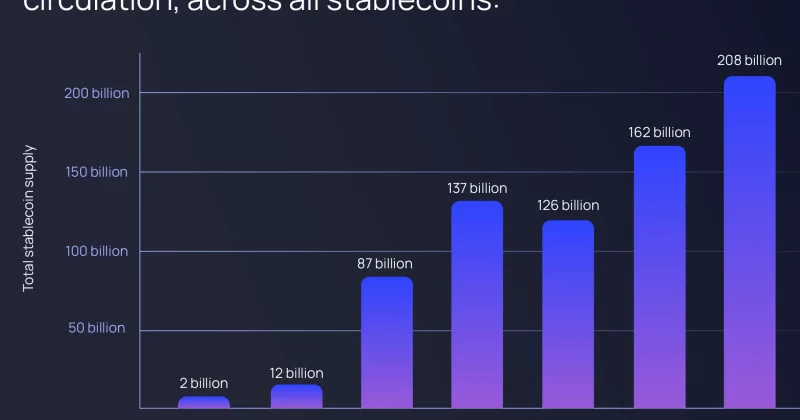
The stablecoin market is worth well over $100B. Non-dollar stablecoins account for roughly 0.2% of it.
The dollar’s quiet monopoly
USD-denominated stablecoins account for over 95% of total stablecoin market capitalization, according to analysis from the Bank for International Settlements and the European Central Bank. Tether’s USDT and Circle’s USDC are the two gravitational forces holding the ecosystem together, with fiat-backed stablecoins broadly constituting about 87% of all circulating supply.
Non-dollar alternatives barely register. Euro-pegged stablecoins, the most prominent alternative category, are concentrated in just two dominant tokens. Even with Europe’s MiCA regulatory framework supposedly giving euro stablecoins a clearer legal runway, they haven’t managed to move the needle.
The core issue is a chicken-and-egg problem that non-dollar stablecoins can’t seem to escape. Without deep liquidity, traders won’t use them. Without traders using them, liquidity never develops. And without liquidity, DeFi protocols have no reason to integrate them as base pairs or collateral assets.
Why the dollar keeps winning
Stablecoins serve four primary use cases: crypto trading, transacting in goods, insulating users from local currency instability, and cross-border payments. Every single one of these use cases favors dollar-pegged tokens.
What this means for investors
For DeFi protocols, the lack of non-dollar stablecoin liquidity creates a structural barrier to geographic diversification. Protocols that want to serve European or Asian users with native-currency lending and borrowing face thin order books and wide spreads on non-dollar pairs.
For the broader crypto market, the dollar’s stablecoin dominance creates a subtle but significant geopolitical dynamic. Every USDT and USDC in circulation represents demand for dollar-denominated reserves. As the stablecoin market grows, this effectively extends dollar hegemony into digital finance, something that hasn’t gone unnoticed by central bankers in Europe, China, and elsewhere.