Key Takeaways
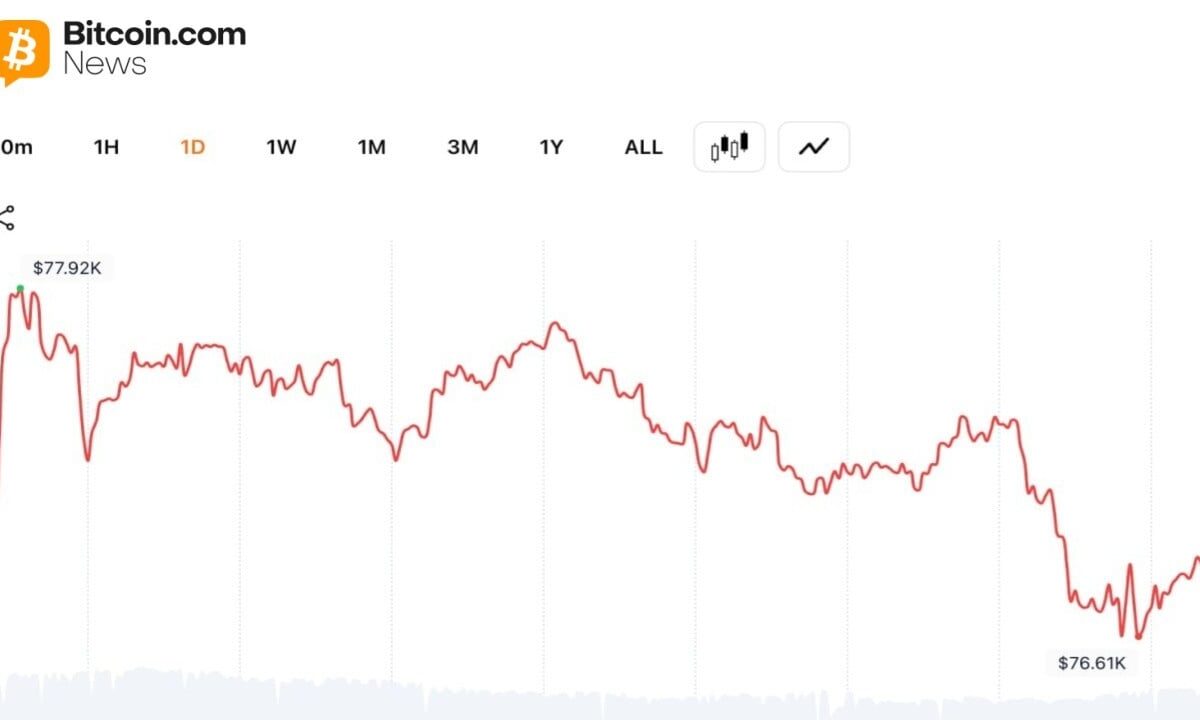
- Bitcoin fell below $77,000 on Friday, hitting an intraday low of $76,476 amid a $1,000 flash sell-off.
- The drop helped drag the total crypto market cap down to $2.65 trillion.
- Bitunix analysts warn that if U.S. Treasury yields trend higher, BTC faces severe expansion in volatility.
Crypto Market Cap Shrinks as Monthly Losses Loom
Bitcoin was on course to close the five-day workweek on the losing side after it slipped below $77,000 just before midday Friday. According to data from Bitstamp, the cryptocurrency briefly plunged to an intraday low of $76,476 following a sell-off that saw it shed nearly $1,000 in little over two hours. At 12:40 p.m. EST, bitcoin had recovered to around $76,800 and looked poised to test the $77,000 resistance level.
Well before the afternoon sell-off, the cryptocurrency generally oscillated between $77,200 and just under $78,000, a trend that began Thursday afternoon. However, shortly after 9 a.m., significant selling pressure forced the price down, leaving bitcoin in the red for the second consecutive day.
The retreat pushed bitcoin’s weekly losses to 3 percent and dragged its market capitalization to $1.54 trillion, down from $1.55 trillion on May 21. This decline, combined with flat altcoin price action, slid the total crypto market capitalization to $2.65 trillion. With one week left in the month, bitcoin’s bearish trend points to a negative monthly close, locking in double-digit losses year-to-date.
Bitcoin’s price action decoupled from global equities, which largely rallied on optimism surrounding diplomatic breakthroughs aimed at permanently resolving the U.S.-Iran conflict. De-escalation narrative gained further traction following reports that Gulf states actively lobbied Washington against resuming combat operations. This concerted diplomatic pressure reassured capital markets that a near-term return to kinetic warfare remains off the table.
Already, cooling geopolitical tensions have caused WTI and Brent crude oil prices to tumble below $100 and $105 per barrel, respectively. Easing oil prices, in turn, took the steam out of rising bond yields, with the 10-year U.S. Treasury yield ticking down to 4.55 percent after testing 4.63 percent earlier in the week. According to one report, this slight cooling helped stabilize stock valuations, particularly within high-growth tech sectors.
Meanwhile, Bitunix analysts believe that within the crypto market, bitcoin’s significance is evolving beyond that of a traditional risk asset, increasingly resembling a real-time barometer for global liquidity conditions and investor confidence. They argue that when bond markets begin pricing in renewed rate hikes while oil and gold rise simultaneously, it signals that demand for defensive positioning is strengthening, which directly affects capital flows into high- volatility assets.
“The market’s true concern is no longer a single bearish catalyst, but whether global capital is beginning to rotate away from growth-oriented assets toward defensive allocations. If Treasury yields continue trending higher, BTC volatility could expand further, forcing markets to reassess the crypto sector’s actual resilience under a prolonged high-rate environment,” the analysts said.

Bitcoin Bulls Lose Control After $78,000 Rejection Wipes out Overnight Recovery
Bitcoin has erased its recent gains, failing to hold the $78,000 threshold and dropping to just above $77,000. [key_takeaways] Key…


Bitcoin Bulls Lose Control After $78,000 Rejection Wipes out Overnight Recovery
Bitcoin has erased its recent gains, failing to hold the $78,000 threshold and dropping to just above $77,000. [key_takeaways] Key…
Bitcoin Bulls Lose Control After $78,000 Rejection Wipes out Overnight Recovery
Bitcoin has erased its recent gains, failing to hold the $78,000 threshold and dropping to just above $77,000. [key_takeaways] Key…