Table of Contents
Before signing on as Mashable’s tech editor, I reviewed the GoPro Hero12 and Hero13 Black for the site. They were both equally impressive cameras, while also being slightly underwhelming, with iterative upgrades to battery life and new software features like vertical video. Both cameras had the same GP2 processor and 1/1.9″ CMOS sensor as the Hero11.
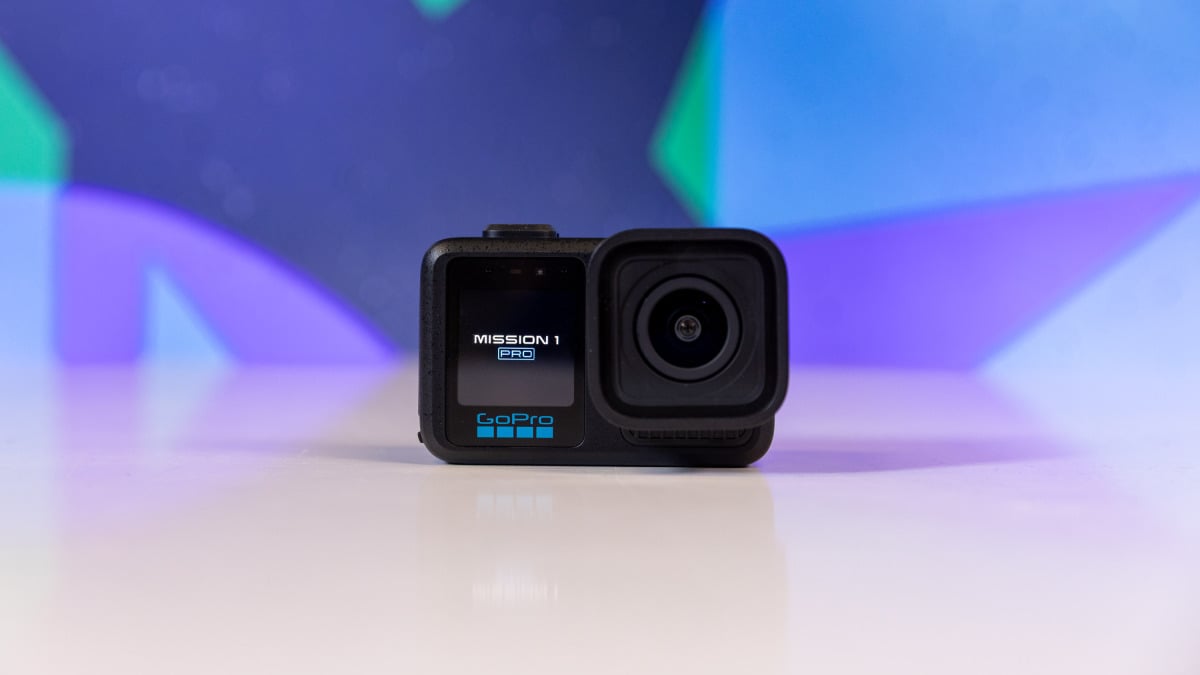
This year, instead of dropping a Hero14 Black, GoPro is introducing an entirely new line of cameras with some exciting new abilities — the Mission 1 Series. Finally, we have a new GoPro sensor and processor to play with.

I’ve just started testing the Mission 1 Pro, and like my colleague at CNET (both Mashable and CNET are owned by Ziff Davis), I’m not yet ready to render a final verdict. I can say that I’ve been impressed with this camera so far, and I’m excited to try and push it to the limits.
I can also tell you that while the new Mission 1 cameras solve some of GoPro’s recent problems, they don’t solve them all.
Meet the GoPro Mission 1 cameras

Credit: René Ramos / Mashable
The Mission 1 and Mission 1 Pro (the model I’ve been testing) launch on May 28 for $599.99 and $699.99, respectively. In Q3, GoPro will also launch the Mission 1 Pro ILS, a mirrorless version of the Mission 1 Pro with an interchangeable lens mount, allowing creators to use professional lenses with GoPro’s pocket-sized, ultra-durable cameras. I bet a lot of pro photographers and videographers are excited about that one, which will also be priced at $699.99.
Both the Mission 1 and Mission 1 Pro introduce a new GP3 processor (finally), as well as a larger one-inch sensor with a native resolution of 7,680 x 5,760 pixels. For $100 more, the Mission 1 Pro also offers a headline-grabbing 960fps slow motion video, 8K open-gate recording, and improved low-light video. You can capture 44.2MP stills from video or take 50MP action shots.
Both cameras are noticeably larger and heavier than the latest Hero13 Black, yet they still feel like action cameras and offer all the durability and motion stabilization you expect from a GoPro.
GoPro Mission 1 Series: By the numbers

Credit: René Ramos / Mashable
The Mission 1 is available May 28 for $599 (or $499 for GoPro subscribers).
-
New 1-inch sensor
-
New GP3 processor
-
Open Gate 4K120 video at 4:3
-
8K30/25 at 16:9
-
Up to 8x Slo-Mo
-
4K120 at 16:9
-
50MP Photo + RAW
-
HLG HDR / 10-Bit + GP-Log2
-
Up to 5+ hours battery life (2,150mAh Enduro 2 battery)
The Mission 1 Pro is available May 28 for $699 (or $599 for GoPro subscribers).
-
New 1-inch sensor
-
New GP3 processor
-
Open-gate 8K30 video (50MP) at 4:3
-
Open-gate 4K120 video (12MP) at 4:3
-
16:9 video up to 8K60/50
-
960fps slow-motion video (up to 32x)
-
Up to 5+ hours battery life (2,150mAh Enduro 2 battery)
-
50MP Photo + RAW
-
HLG HDR / 10-Bit + GP-Log2
-
Up to 5+ hours battery life (2,150mAh Enduro 2 battery)

The GoPro Mission 1 Pro with Dual Battery Charger and new Point-and-Shoot Grip.
Credit: René Ramos / Mashable
Along with the new cameras, GoPro is also introducing new accessories, including the new GoPro Wireless Mic Complete Kit (again, finally), a Point-and-Shoot Grip for the Mission 1 Pro, a new Media Mod, an ND Filter four-pack, Protective Housing (waterproof to 196 feet/60 meters), and a Vertical Mount Adapter.
GoPro’s Mission 1 Series has a lot to offer pros and creators

GoPro provided this sample photograph shot on the new Mission 1 Pro.
Credit: GoPro
In a briefing ahead of the launch, GoPro representatives told me that the Mission 1 Series was specifically designed to support professionals and creators who want the highest level of control over their content. For example, the cameras offer a new 240Mbps high bit-rate mode, which just so happens to be Netflix’s required specs for footage.
Mashable Light Speed
Their reviewer’s guide even helpfully includes recommended LUTs for video editing. And that’s a nice and easy way to answer the question: Is the Mission 1 Series worth it for me? I’ll put it this way: If you don’t work with LUTs, know what GP-Log2 means, or mess around with color grading, then you probably don’t need to spend the extra money to invest in the Mission 1 Series.
The GoPro Hero and MAX cameras will do you just fine.

GoPro visualization of the new one-inch sensor in the Mission 1 Series.
Credit: GoPro
For pros, creators, and near-pros, the Mission 1 Pro seems mighty impressive to me so far. It’s competing more with Sony vlogging cameras and BlackMagic cinema cameras than the average action cam.
The ability to shoot open-gate video in 8K and 4K will be a game-changer for a lot of folks, as will the larger sensor. So, even if I can’t yet render a verdict on the new sensor and processor, if you implicitly trust GoPro, I think you can safely invest in these cinematic action cameras.
My very early hands-on impressions

Credit: René Ramos / Mashable
Having shot with GoPro cameras before, the Mission 1’s larger sensor does seem to give you more flexibility. The Hero13 Black already featured digital lenses that let you switch the field of view, but the Mission 1 has even more input to work with. It feels a little bit like a magic trick when you instantly switch from the broad field of view of the Linear (22-27mm) lens to the classic GoPro fisheye look of the Wide (16-24mm) lens.
When editing, you can also switch back and forth from 16:9 to vertical video aspect ratios like 3:4 and 9:16. Again, that’s not new with the Mission 1, but with a larger sensor and open-gate capture, you have a much larger and richer canvas to work on.

It’s as easy as ever to connect your camera and upload footage in the Quik app.
Credit: Screenshot: Quik app

Switch from 16:9 to 9:16 in an instant.
Credit: Screenshot: Quik app
Thanks to the larger sensor and new GP3 processor, the new GoPro cameras also have much improved low-light performance. And for adventure athletes, classic GoPro features like motion stabilization and horizon lock should also work better than ever, as will digital zoom and subject tracking. The touchscreen and voice controls, auto uploads over WiFi, and Quik app are all highlights for me as well.
GoPro still faces serious competition, and the Mission 1 is only a partial fix
The name “GoPro” is still synonymous with action cameras, but the company is no longer the only name in the game. In recent years, the Chinese companies DJI and Insta360 have introduced some very impressive action cameras of their own, even offering better specs in some regards.
The Insta360 Ace Pro 2 offered a variable aperture, Leica optics, and 8K shooting (the Hero13 Black’s maxes out at 5.3K). The DJI Osmo Action 6 Pro boasts better low-light performance than the Hero line thanks to its large sensor. On top of that, DJI also makes the hugely popular Mic Mini and Mic 3.

The new Point-and-Shoot mount.
Credit: René Ramos / Mashable
In the last few years, I’ve seen DJI in particular become hugely popular with Mashable shoppers, and I’ve had great experiences working with the DJI Osmo Mobile gimbal, Osmo Pocket cameras, and the TikTok-famous DJI Mic Mini. And while GoPro is now releasing its own wireless mic kit, Insta360 just released a very cool-looking wireless mic with a customizable e-ink display. If you want to stick within a single product ecosystem, DJI now has a lot to offer beyond action cameras and drones.
So, while the Mission 1 Pro (and especially the upcoming Mission 1 Pro ILS) offers a boundary-pushing option for professionals and creators, for the everyday consumer, GoPro still has some hard work ahead. For instance, I’m not sure why you’d buy the new GoPro wireless mic kit unless it was part of a bundle or you’re deeply brand-loyal to GoPro.
GoPro seems to be catering to its most hardcore customers, and that’s not necessarily a bad thing.
Should you buy the GoPro Mission 1 and Mission 1 Pro?

Credit: René Ramos / Mashable
If you’re a long-time GoPro fan looking to upgrade your camera, then the Mission 1 and Mission 1 Pro have a lot to offer. And with the $100 discount you get as a GoPro subscriber, these cameras are significantly more affordable.
For now, I’ll say this: The Mission 1 Pro is expensive for a GoPro action camera, but it’s a great price for a cinematic camera.