

When Avatar: The Last Airbender premiered on Nickelodeon in 2005, no one could have predicted that nearly two decades later, one of its characters would still be one of the internet’s favorite fictional boyfriends. Yet here we are.
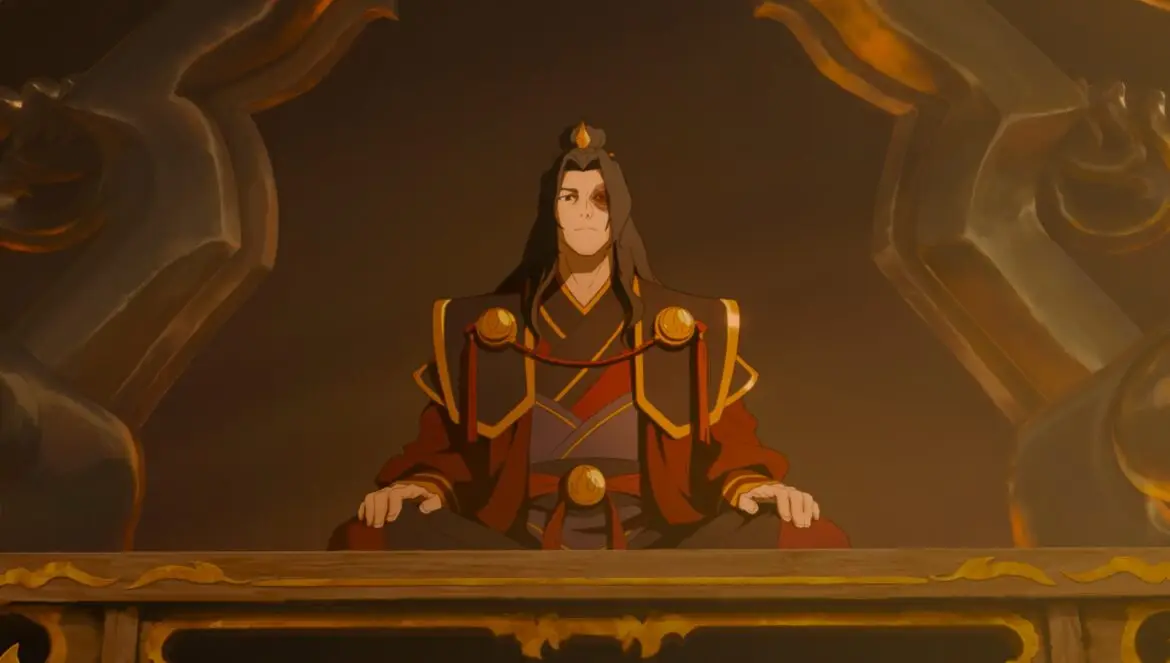
Since Avatar Aang: The Last Airbender arrived on Paramount+ and in select theaters, my TikTok algorithm has developed a singular obsession: making sure I see adult Zuko in all his gorgeous, danmei-esque glory. Not clips from the movie. Edits. Slowed down. Zoomed in. Color graded to perfection.
The same handful of shots appear over and over, each transformed by a different corner of internet culture. There’s the now-ubiquitous Doja Cat “Jealous Type” edit (see examples here, here, and here). Others swap in Sabrina Carpenter or Britney Spears. Another pairs Zuko with the viral audio of increasingly frantic cats meowing — the universal soundtrack for fictional men so attractive they short-circuit your brain. Another opts for barking dogs instead. One creator dissolved into tears trying to explain how unfairly good adult Zuko looks. Honestly? I understood every word.
On X, the reactions are even less restrained. “Zuko is so sexy just sitting there looking ripped af and his hair in a bun,” one viral post reads. Another declares, “Adult Zuko is so hot and sexy. I’d take on the world just to have him.”
The internet, it seems, has once again reached a consensus. Unfortunately, many of these edits don’t survive for very long. As copyrighted clips from the film, they’re often removed almost as quickly as they go viral.
Legally, that makes sense. Practically, it’s a little harder to understand. Because by the time an edit disappears, it’s usually already done exactly what great marketing is supposed to do. It’s racked up hundreds of thousands of views. It’s inspired TikTok stitches and reaction videos. It’s filled the comments with people asking where the clip is from or admitting they’ve never watched Avatar before but suddenly want to.
This Tweet is currently unavailable. It might be loading or has been removed.
This Tweet is currently unavailable. It might be loading or has been removed.
Studios spend millions trying to convince audiences to care about a movie. Meanwhile, fans are doing it organically, one 20-second edit at a time. In 2026, the edit has become the trailer.
One of my own friends has tried to get into the original Avatar series more than once. It never clicked. But after days of TikTok serving her edit after edit of hot Zuko, she texted asking if I’d take her to see the movie in theaters.
That’s the magic of internet fandom. It doesn’t just keep beloved characters alive — it keeps introducing them to people who somehow missed them the first time around.
What’s happening with Zuko speaks to something bigger than a viral thirst trend. It’s a reminder that some characters never really leave the internet. They get passed from platform to platform, generation to generation, finding new audiences through fan edits, memes, fan art, and recommendations powered more by fandom than by marketing.
Dante Basco, who voiced teenage Zuko in the original series, has watched that happen in real time. Speaking to Fandom for the show’s 15th anniversary in 2020, Basco described Avatar as “so timeless” and said he was happy that “a new generation is discovering it now.” He also noted that the fanbase never really disappeared, saying fans were “always continually following it and cosplaying.”
That enduring enthusiasm helps explain why the arrival of an official adult Zuko has taken over social media. The movie may have given fans new footage, but it didn’t create the fascination. It simply reignited one that has quietly been thriving online for nearly two decades. It doesn’t hurt that adult Zuko is voiced by another internet boyfriend: Steven Yeun.
Long before “book boyfriend” entered the mainstream lexicon and before TikTok perfected the art of the thirst edit, Zuko dominated Tumblr dashboards, YouTube AMVs, fanfiction archives, cosplay conventions, and GIF sets. Fans wrote essays dissecting his redemption arc, created fan art imagining his future as Fire Lord, and spent years debating every step of his journey. As Dante Basco told Fandom, fans still regularly approach him to say Zuko has “one of the greatest redemption arcs in history.”
That devotion isn’t an accident. In fact, Zuko almost didn’t exist. On the Avatar: Braving the Elements podcast, co-creator Bryan Konietzko recalled that Zuko emerged after Nickelodeon executive Eric Coleman suggested the series needed “someone who’s going after them the whole time.” Konietzko’s response: “Can he have a scar?”
The creators also knew from the very beginning where his story was headed. “It’s in the series bible,” Konietzko said. “We knew that Zuko was going to become Aang’s teacher.”
That long-game storytelling is part of what makes Zuko endure while so many animated characters have faded into nostalgia. He’s not redeemed overnight. He stumbles, backslides, betrays the people trying to help him, and ultimately has to choose, over and over again, the person he wants to become. His emotional vulnerability, dry sense of humor, and hard-earned growth make him the kind of character audiences can root for.
“We love the villain who’s been hurt and who is given the opportunity to come back from that,” said Janet Varney, who voices Korra, during the same podcast conversation. Konietzko agreed, noting that even he sees Zuko as someone with “an amazing redemptive arc.”
He’s also incredibly editable. Every glance, every fight scene, every quiet moment carries emotional weight because fans already know where his story leads. A well-made edit can communicate that emotional journey in under 30 seconds, even to someone who’s never watched an episode.
That’s part of what’s changed about fandom in the TikTok era. Character edits have quietly become one of the internet’s most effective recommendation engines. Instead of convincing viewers to watch an entire series, they convince them to care about one character. The rest often follows.
For years, studios have tried to figure out how to introduce older franchises to new audiences. Increasingly, the answer is powered by fandom.
A compelling edit can do what traditional marketing often can’t: make someone emotionally invested before they’ve watched a single scene. We’ve seen it happen across pop culture. A fancam introduces someone to a K-pop group. A TikTok revives a decade-old song. An anime edit sends viewers rushing to Crunchyroll. The algorithm has become one of the internet’s most powerful discovery engines, constantly resurfacing stories for audiences who missed them the first time around.
Zuko is perhaps the clearest example of how that cycle can last for decades. Ironically, Paramount spent months trying to keep Avatar Aang footage offline after the film leaked earlier this year. Now that the finished film is finally streaming, it’s fans, not the studio, who are generating the clips everyone wants to watch.
The creators of Avatar Aang have described the film as a chance to revisit Team Avatar at “this precipice between adolescence and adulthood,” reconnecting with characters who have grown up alongside the audience that first fell in love with them.
But if TikTok is any indication, fans didn’t need much convincing to come back.
That’s why the flood of “hot Zuko” edits feels like more than a fleeting social media trend. They’re evidence that fandom itself has become part of a franchise’s longevity. Characters no longer live only within the stories that created them. They continue evolving through the internet, where fans remix and reintroduce them to thousands of potential new viewers.
And if my friend finally watches Avatar because TikTok convinced her to give a scarred Fire Nation prince a chance? Honestly, I don’t think she’ll be the first. And judging by my For You page, she definitely won’t be the last.
Avatar Aang: The Last Airbender is now in select theaters and streaming on Paramount+.
Source: https://mashable.com/life/avatar-hot-zuko-edits-the-last-airbender